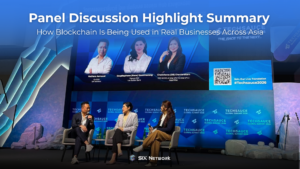
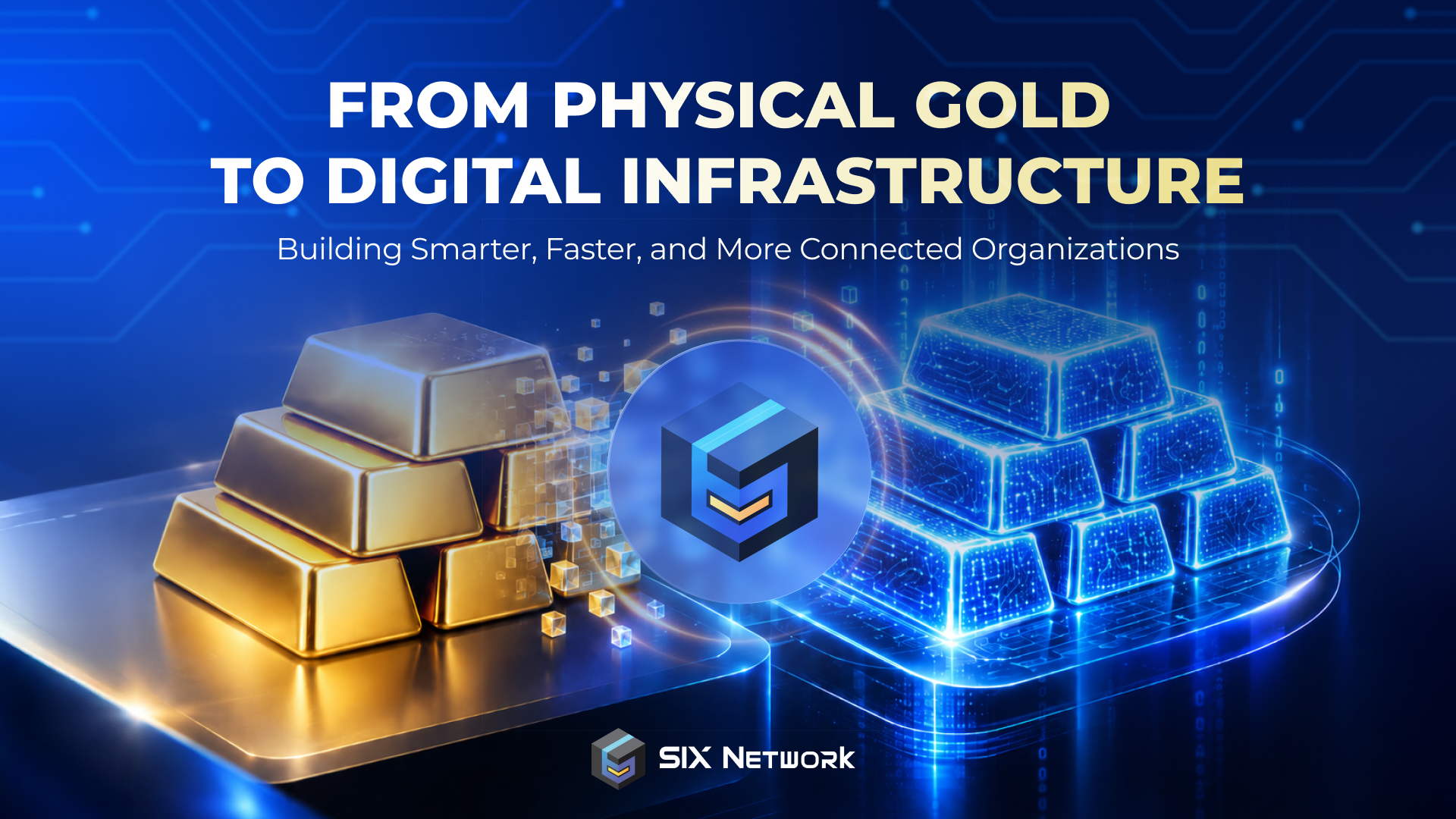
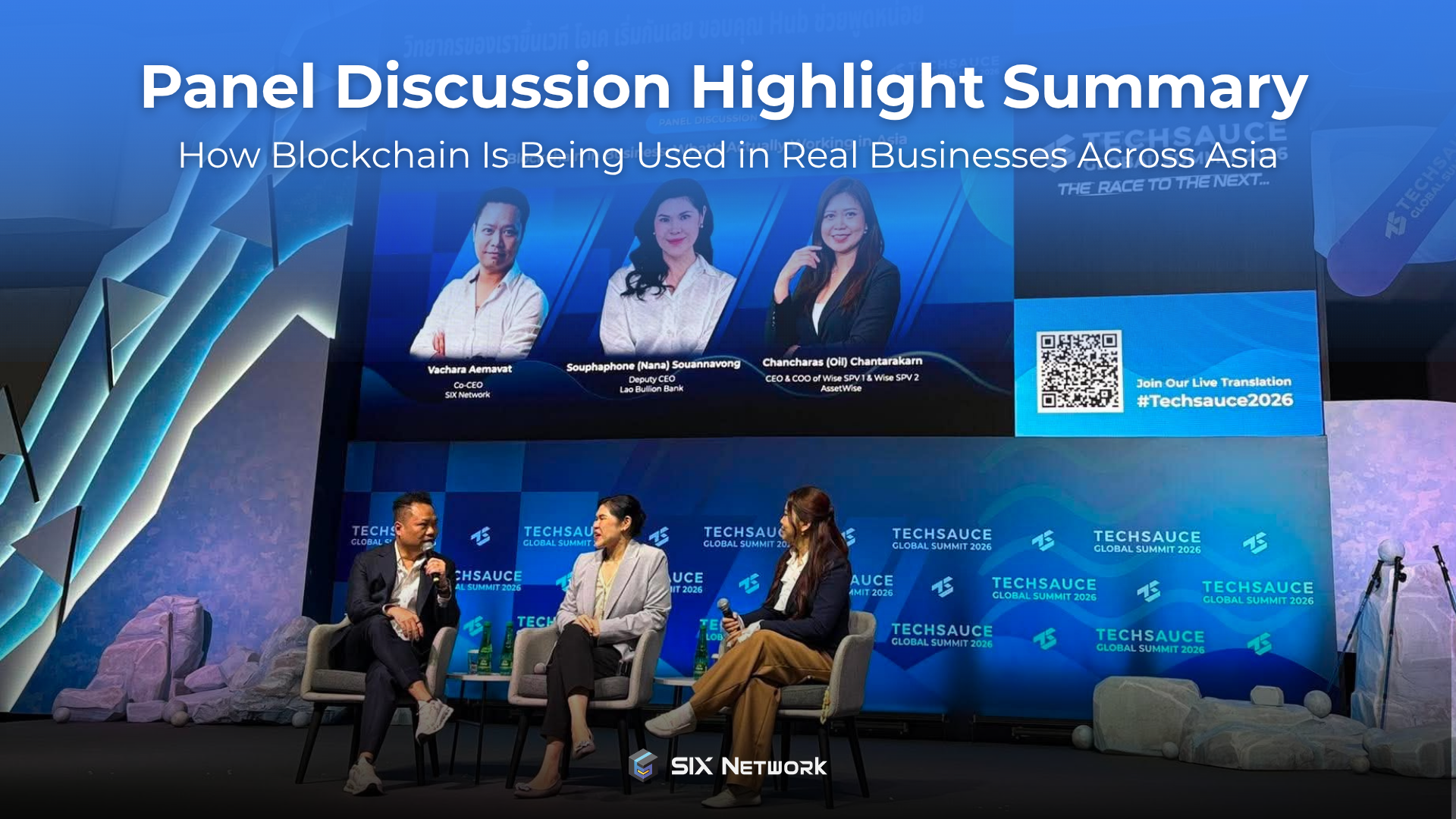
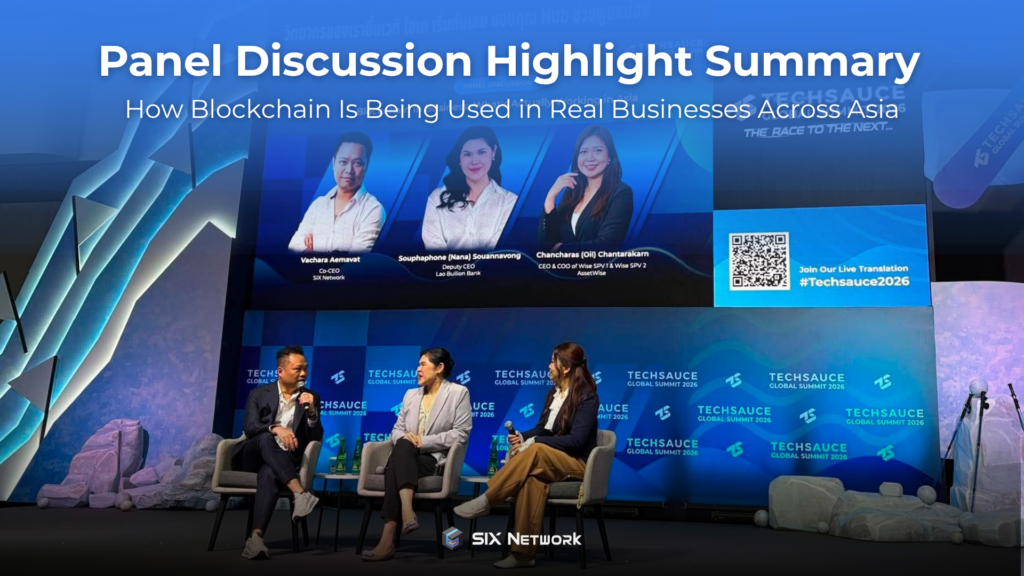
SIX Network joined representatives from Lao Bullion Bank (LBB) and Wise SPV to exchange perspectives on how Blockchain Infrastructure and RWA Tokenization are being applied in real business environments. The discussion brought together experience from technology, financial institutions, and real estate, ranging from integrating gold into the financial system to developing tokenized real estate projects.
The session focused on two central questions: How are organizations actually applying blockchain in business today? and What factors enable projects to move beyond experimentation toward practical implementation and long-term development?
On stage, Khun Kuck Watchara, Co-CEO of SIX Network, invited both speakers to revisit the origins of their respective projects, including what led their organizations to move from studying and experimenting with technology to adopting Tokenization in practice. The discussion also explored what comes next after implementation, and how Tokenization can continue to create value for both businesses and users.
Tokenization and the Development of an Investment Ecosystem
Khun Oil, CEO & COO of Wise SPV 1 & 2, shared how the decision to adopt Tokenization for real estate projects emerged from studying investor behavior and the growing demand for new investment models.
The development of the Tokenization structure took approximately eight months before being applied to an actual project, while the fundraising process took around one year.
Another important factor was investor understanding. Technology alone is not enough. Investors also need to understand the underlying asset, the project structure, and the information behind the Token in order to make informed investment decisions.
The experience from KAVALON and AQUAROUS, each with a project value of approximately THB 400 million, also reflects how investor relationships can extend beyond a single fundraising cycle. Wise SPV sees investment as a gateway for investors to become more familiar with and engaged in the broader business ecosystem, with the potential to develop into a longer-term community.
From Gold Holdings to Assets Connected with the Financial System
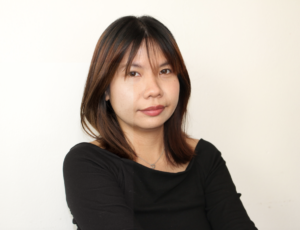
From the perspective of Khun Nana, Deputy CEO of Lao Bullion Bank, gold is viewed as more than a store of value. It can also be integrated into the financial system and connected with new forms of financial services.
The concept of a gold bank is built around bringing gold into the system so that holders can make greater use of the assets they already own, while creating room for future financial services built around gold.
Another area of focus for LBB is regulation and building understanding with regulatory authorities, particularly when exploring ways to extend gold into fractionalized forms or connect it with other uses within the financial system.
Experience and case studies from more developed markets, such as Hong Kong, can help both organizations and regulatory stakeholders gain a clearer view of real business applications and practical approaches to implementation.
SIX Network Looks Beyond Tokenization Toward Real-World Use
Throughout the session, Khun Kuck, Co-CEO of SIX Network, encouraged both speakers to look beyond the creation of a Token and consider what comes next after an organization begins Tokenization, as well as how the technology can continue to create value in a real business context.
Across both the real estate and financial institution perspectives, one shared conclusion emerged: Tokenization does not end when an asset is brought onto the blockchain. Organizations still need to consider investors, users, business structures, regulation, and the broader ecosystem that will support those assets over the long term.
Key Success Factors for Organizations Implementing Tokenization
1. Start with a clear Business Case
Organizations need to understand what problem Tokenization is solving or what opportunity it is creating before deciding which technology to adopt.
2. Build understanding among investors and users
Users need to understand the asset, the project structure, and the value of the project, not just the Token itself.
3. Work closely with regulatory stakeholders
For assets connected to the financial system, building regulatory understanding and learning from case studies in other markets are important parts of development.
4. Build an Ecosystem, not just a Token
Tokenization can become a starting point for connecting investors with other products, services, and experiences across the business.
5. Infrastructure must support real-world implementation
For SIX Network, developing RWA Tokenization requires connecting technology, asset structure, collaboration across business functions, and relevant stakeholders so that they can operate together in a systematic way.
The session reflected how blockchain use cases in Asia are increasingly moving beyond experimentation toward applications connected to real assets and business processes. Success depends not on technology alone, but on designing structures that bring together Business Value, Infrastructure, Regulation, and Users.
We would like to thank Khun Nana, Deputy CEO of Lao Bullion Bank, Khun Oil, CEO & COO of Wise SPV, and Khun Kuck, Co-CEO of SIX Network, for sharing their experiences and perspectives from real-world project development on stage.
Stay tuned for more updates from SIX Network.