fbpx

Expanding the RWA Ecosystem and Exploring New Assets on SIX Protocol

Expanding the RWA Ecosystem and Exploring New Assets on SIX Protocol

Bringing More Assets On Chain

Beyond developing institutional-grade assets, another key initiative for SIX Network in 2026 is to expand the diversity of assets that can be brought on chain. This direction aims to support broader use cases and align with long-term market demand.


Currently, SIX Network is exploring the feasibility of onboarding various asset classes in collaboration with regional financial institutions. These include regulated asset types such as commodities, bonds, stablecoins, and equities, assets that play important roles in financial markets and are widely recognized by both investors and institutions.


From Single Asset Focus to a Multi-Asset Ecosystem


Bringing these assets onto SIX Protocol represents a continuation from earlier implementations, particularly in real estate, toward a more diversified ecosystem capable of supporting a wider range of asset types.


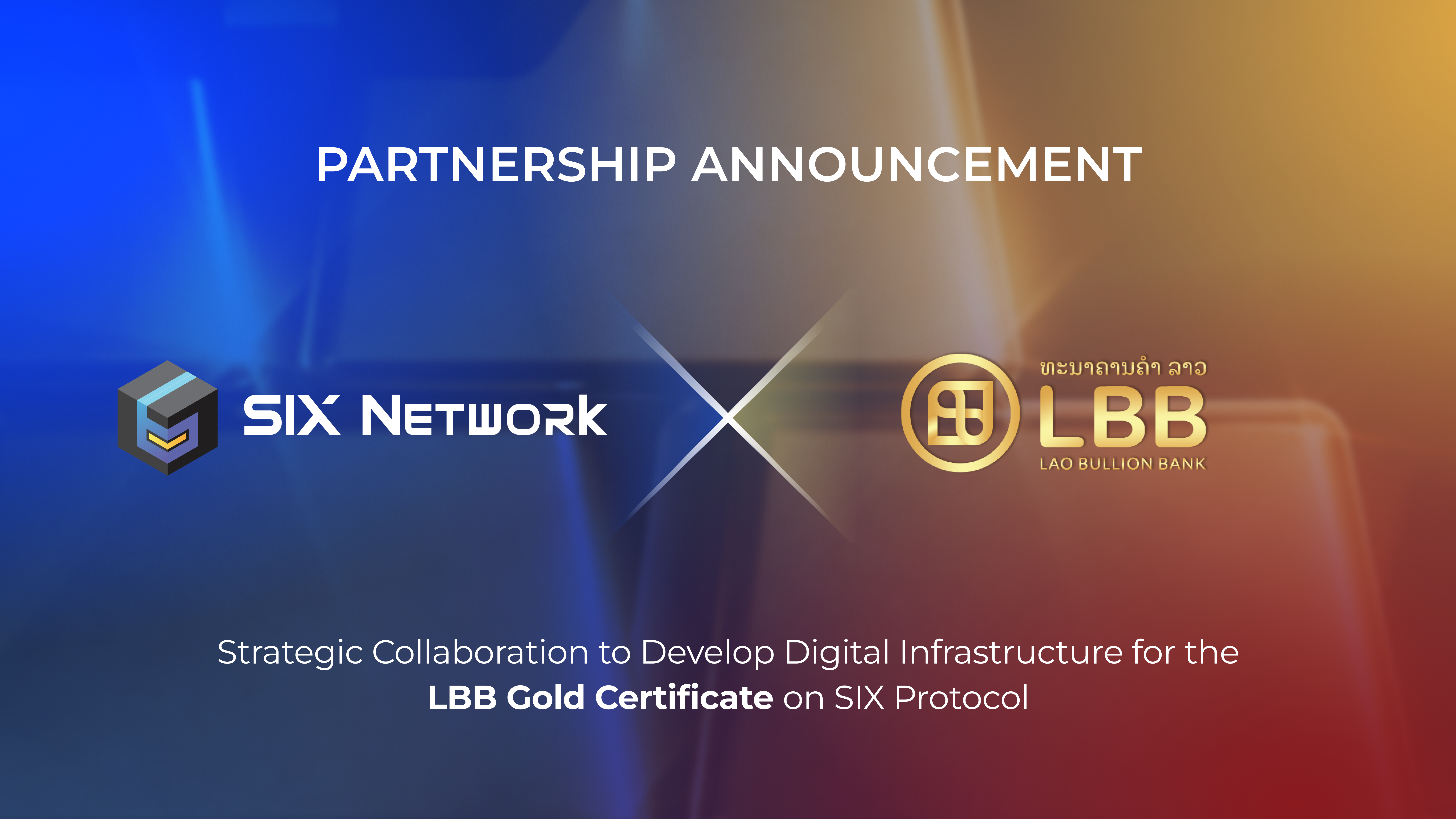
One example of an asset class under consideration is gold, which remains one of the most globally trusted stores of value. Central banks around the world hold gold as part of their reserves, and it has long served as a reliable long-term asset in financial markets. Introducing assets like gold onto blockchain connects globally trusted asset classes with digital infrastructure.


This approach creates opportunities for assets that play significant roles in the global economy to operate more seamlessly within blockchain-based systems.


Enabling New Use Cases Across Asset Classes


In the long term, tokenized assets on SIX Protocol may serve as the foundation for a wider range of applications, including settlement processes, collateral structures, and participation in the evolving digital financial landscape.


This direction reflects the ongoing development of SIX Protocol toward infrastructure that can support a broader spectrum of asset types, while enabling new use cases that bridge real-world assets with digital systems.


• Read the full SIX Network Roadmap 2026: Click

• Join our Roadmap 2026 campaign: Join Now

⎯⎯⎯⎯⎯⎯⎯⎯⎯⎯⎯⎯⎯⎯⎯⎯⎯⎯⎯⎯⎯⎯⎯⎯⎯⎯⎯⎯⎯⎯⎯⎯

Disclaimer:

1.This article is intended for informational purposes only. Please conduct your own research before making any investment decisions related to cryptocurrencies 2. Cryptocurrency and digital token involve high risk; investors may lose all investment money and should study information carefully and make investments according to their own risk profile.


Don’t miss out follow us at:

Warisara Thepsiri
Warisara Thepsiri

Experience the magic of Blockchain with SIX Network!

Related Posts

​​SIX Network Announces Partnership with Selanet, AI Agent Infrastructure Developer, to Drive Web3 Ecosystem Growth

SIX Network ประกาศความร่วมมือกับ Selanet ผู้โครงสร้างพื้นฐานสำหรับ AI Agents

SIX Network ประกาศความร่วมมือกับ Selanet ผู้พัฒนา Infrastructure สำหรับ AI Agents เพื่อขับเคลื่อน Web3 Ecosystem   เรามีความยินดีอย่างยิ่งที่ได้ประกาศความร่วมมือกับ Selanet ผู้พัฒนาโครงสร้างพื้นฐานดิจิทัลที่ช่วยให้ AI agents สามารถทำงานบนเว็บไซต์ต่าง ๆ

Read More

Increasing Institutional Asset Tokenization on SIX Protocol

Increasing Institutional Asset Tokenization on SIX Protocol

Expanding Institutional Assets On Chain

​​Advancing Real-World Financial Infrastructure

As the infrastructure of SIX Protocol continues to mature, the next phase of development focuses on moving beyond project-based asset tokenization toward larger, institutional-grade assets with structures aligned to market standards.

Previous deployments have already demonstrated that tokenizing real-world assets, such as real estate, is not only feasible but can be implemented in real business environments. These early use cases serve as a foundation for expanding into more complex asset structures that meet the needs of institutional participants.


From Use Cases to Institutional-Grade Assets


The next stage of on-chain asset development is centered on transitioning from individual projects to institutional-grade assets that can operate within real organizational and financial contexts.


SIX Network has already introduced institutional-level assets onto the blockchain through projects such as SiriHub2, a tokenized asset backed by real estate. This project demonstrates the practical viability of bringing institutional assets on-chain.


Building on this foundation, SIX aims to expand toward assets with clearer structures, higher credibility, and the ability to operate continuously at an organizational level, key characteristics required for institutional adoption.


Developing Assets Under Institutional Standards


Institutional-grade assets require more than simply being deployed on-chain.
They must be supported by clear governance structures, regulatory alignment,
and verifiable transparency. factors that are essential for acceptance at the institutional level.


In this context, asset development on SIX Protocol is designed to align with relevant regulatory frameworks and guidelines, including those set by regulatory authorities such as the SEC. This ensures that asset issuance and management can operate appropriately within legal and market standards.


This approach is not just about increasing the number of assets on-chain, but about enhancing the overall quality of assets to support real-world institutional use cases.


Strengthening the Ecosystem for the Next Phase of Growth

The objective for 2026 is to continuously expand the presence of institutional-grade assets on SIX Protocol, building an ecosystem that is both diverse and increasingly credible.


As institutional assets become a larger part of the network, they contribute to strengthening the overall system, enhancing user confidence, attracting strategic partners, and enabling broader use cases across the ecosystem.


This marks another important step in aligning SIX Protocol with the direction of the global RWA market, as it continues to evolve and expand.


• Read the full SIX Network Roadmap 2026: Click

• Join our Roadmap 2026 campaign: Join Now

⎯⎯⎯⎯⎯⎯⎯⎯⎯⎯⎯⎯⎯⎯⎯⎯⎯⎯⎯⎯⎯⎯⎯⎯⎯⎯⎯⎯⎯⎯⎯⎯

Disclaimer:

1.This article is intended for informational purposes only. Please conduct your own research before making any investment decisions related to cryptocurrencies 2. Cryptocurrency and digital token involve high risk; investors may lose all investment money and should study information carefully and make investments according to their own risk profile.


Don’t miss out follow us at:

Warisara Thepsiri
Warisara Thepsiri

Experience the magic of Blockchain with SIX Network!

Related Posts

​​SIX Network Announces Partnership with Selanet, AI Agent Infrastructure Developer, to Drive Web3 Ecosystem Growth

SIX Network ประกาศความร่วมมือกับ Selanet ผู้โครงสร้างพื้นฐานสำหรับ AI Agents

SIX Network ประกาศความร่วมมือกับ Selanet ผู้พัฒนา Infrastructure สำหรับ AI Agents เพื่อขับเคลื่อน Web3 Ecosystem   เรามีความยินดีอย่างยิ่งที่ได้ประกาศความร่วมมือกับ Selanet ผู้พัฒนาโครงสร้างพื้นฐานดิจิทัลที่ช่วยให้ AI agents สามารถทำงานบนเว็บไซต์ต่าง ๆ

Read More

Expanding SIX Network into the Global RWA Market

Expanding SIX Network into the Global RWA Market

Scale in the Global RWA Market

​​Building Visible Value with THB 2.49 Billion in TVL


As outlined in our 2026 roadmap, SIX Network is moving forward with a clear direction to expand the role of SIX Network and SIX Protocol into the global RWA market. This builds on our continuous development of tokenization technology, alongside strategic collaborations to support bringing real-world assets onto blockchain infrastructure.


Today, SIX Protocol holds approximately THB 2.49 billion in total value locked (TVL), reflecting early-stage real-world adoption at a level where the market can begin to recognize and evaluate its potential.


The growth of the RWA market signals that we are on the right path

Growth of Total RWA Value on 1 Jan 2025 - 1 Jan 2026

Growth of Total RWA Value on 1 Jan 2025 – 1 Jan 2026


The chart above illustrates the growth of the RWA tokenization market based on data from RWA.xyz, a leading analytics platform tracking real-world asset tokenization.


Over the past few years, the market has experienced rapid expansion, reaching a total value of more than USD 26.89 billion and growing over fourfold within just one year.


This growth reflects increasing interest from both institutional players and a broader base of investors. More importantly, it signals a structural shift, where RWA tokenization is evolving into a key component of modern financial infrastructure, enabling the widespread integration of blockchain technology across real-world financial use cases.


This momentum is one of the key reasons SIX Network is expanding into the global RWA market, alongside continuously onboarding new asset types onto the protocol. The objective is not simply to increase on-chain asset value, but to focus on asset classes that are already trusted and understood globally, such as commodities, stablecoins, stocks, and other familiar financial instruments that institutional and global partners can easily recognize and adopt.


Currently, SIX Protocol supports over USD 90 million in on-chain assets, representing early traction in bringing real-world assets onto blockchain infrastructure. Based on this, the protocol has the potential to move toward the global Top 20 networks by total on-chain RWA value.


Expanding globally through ecosystem strength


The next phase of growth for SIX Protocol depends on its ability to develop on-chain assets that align with global market demand, while maintaining infrastructure that supports real-world enterprise use. When both asset quality and system design evolve together, they form the foundation for scalable global expansion.


At the same time, having assets that are recognized and trusted at a global level will strengthen confidence among investors and partners, driving growth across the broader ecosystem, not only at the protocol level, but also extending to SIX Token and Pas.ss as interconnected components of the network.


• Read the full SIX Network Roadmap 2026: Click

• Join our Roadmap 2026 campaign: Join Now


⎯⎯⎯⎯⎯⎯⎯⎯⎯⎯⎯⎯⎯⎯⎯⎯⎯⎯⎯⎯⎯⎯⎯⎯⎯⎯⎯⎯⎯⎯⎯⎯

Disclaimer:

1.This article is intended for informational purposes only. Please conduct your own research before making any investment decisions related to cryptocurrencies 2. Cryptocurrency and digital token involve high risk; investors may lose all investment money and should study information carefully and make investments according to their own risk profile.


Don’t miss out follow us at:

Warisara Thepsiri
Warisara Thepsiri

Experience the magic of Blockchain with SIX Network!

Related Posts

​​SIX Network Announces Partnership with Selanet, AI Agent Infrastructure Developer, to Drive Web3 Ecosystem Growth

SIX Network ประกาศความร่วมมือกับ Selanet ผู้โครงสร้างพื้นฐานสำหรับ AI Agents

SIX Network ประกาศความร่วมมือกับ Selanet ผู้พัฒนา Infrastructure สำหรับ AI Agents เพื่อขับเคลื่อน Web3 Ecosystem   เรามีความยินดีอย่างยิ่งที่ได้ประกาศความร่วมมือกับ Selanet ผู้พัฒนาโครงสร้างพื้นฐานดิจิทัลที่ช่วยให้ AI agents สามารถทำงานบนเว็บไซต์ต่าง ๆ

Read More

SIX Network ประกาศความร่วมมือกับ Selanet ผู้โครงสร้างพื้นฐานสำหรับ AI Agents

SIX Network ประกาศความร่วมมือกับ Selanet ผู้โครงสร้างพื้นฐานสำหรับ AI Agents

​​SIX Network Announces Partnership with Selanet, AI Agent Infrastructure Developer, to Drive Web3 Ecosystem Growth

SIX Network ประกาศความร่วมมือกับ Selanet ผู้พัฒนา Infrastructure สำหรับ AI Agents เพื่อขับเคลื่อน Web3 Ecosystem


เรามีความยินดีอย่างยิ่งที่ได้ประกาศความร่วมมือกับ Selanet ผู้พัฒนาโครงสร้างพื้นฐานดิจิทัลที่ช่วยให้ AI agents สามารถทำงานบนเว็บไซต์ต่าง ๆ ได้อัตโนมัติและเชื่อถือได้ในระดับ production โดย Selanet ช่วยให้ AI agents สามารถเข้าถึง ทำความเข้าใจ และดำเนินการบนเว็บไซต์จริงได้ ไม่ว่าจะเป็นการโต้ตอบกับระบบหรือการทำ workflow ต่าง ๆ แบบ end to end


ความร่วมมือครั้งนี้สะท้อนการนำ AI agents เข้ามาเป็นส่วนหนึ่งของโครงสร้างพื้นฐาน เพื่อขับเคลื่อน Web3 ecosystem ในระดับที่ลึกยิ่งขึ้น


จาก Tool สู่ Infrastructure: วิสัยทัศน์ร่วมของ AI และ Blockchain


การร่วมมือกันในครั้งนี้แสดงให้เห็นถึงการนำ AI agents มาทำงานจริงบน infrastructure ระดับ production ซึ่งสอดคล้องกับทิศทางของ SIX Network ที่กำลังศึกษาและพัฒนาแนวทางการผสาน AI เข้ากับ blockchain เพื่อสร้างระบบที่ชาญฉลาดและขับเคลื่อนด้วยข้อมูลมากยิ่งขึ้น


Selanet แสดงให้เห็นถึงแนวทางของการสร้าง execution layer สำหรับ AI agents ที่สามารถเชื่อมต่อเข้ากับระบบดิจิทัลและ ecosystem ของ Web3 ได้ในทางปฏิบัติ


ความร่วมมือครั้งนี้เปิดโอกาสให้ SIX Network สามารถนำแนวคิดของ AI-driven infrastructure มาประยุกต์ใช้ในการออกแบบ ecosystem และพัฒนากลไกต่าง ๆ เช่น การออกแบบ incentive structure การวางกลยุทธ์การเติบโตของ community และการพัฒนาโปรแกรมที่อิงจากพฤติกรรมผู้ใช้งานจริง


SIX Network อยู่ระหว่างการศึกษาแนวทางในการนำ AI agents มาใช้ร่วมกับ ecosystem และ community initiatives ที่กำลังจะเกิดขึ้น


โปรดติดตามในเร็ว ๆ นี้

⎯⎯⎯⎯⎯⎯⎯⎯⎯⎯⎯⎯⎯⎯⎯⎯⎯⎯⎯⎯⎯⎯⎯⎯⎯⎯⎯⎯⎯⎯⎯⎯

Disclaimer:

1.This article is intended for informational purposes only. Please conduct your own research before making any investment decisions related to cryptocurrencies 2. Cryptocurrency and digital token involve high risk; investors may lose all investment money and should study information carefully and make investments according to their own risk profile.


Don’t miss out follow us at:

Warisara Thepsiri
Warisara Thepsiri

Experience the magic of Blockchain with SIX Network!

Related Posts

​​SIX Network Announces Partnership with Selanet, AI Agent Infrastructure Developer, to Drive Web3 Ecosystem Growth

SIX Network ประกาศความร่วมมือกับ Selanet ผู้โครงสร้างพื้นฐานสำหรับ AI Agents

SIX Network ประกาศความร่วมมือกับ Selanet ผู้พัฒนา Infrastructure สำหรับ AI Agents เพื่อขับเคลื่อน Web3 Ecosystem   เรามีความยินดีอย่างยิ่งที่ได้ประกาศความร่วมมือกับ Selanet ผู้พัฒนาโครงสร้างพื้นฐานดิจิทัลที่ช่วยให้ AI agents สามารถทำงานบนเว็บไซต์ต่าง ๆ

Read More

​​SIX Network Announces Partnership with Selanet AI Infrastructure

​​SIX Network Announces Partnership with Selanet AI Infrastructure

​​SIX Network Announces Partnership with Selanet, AI Agent Infrastructure Developer, to Drive Web3 Ecosystem Growth

​​SIX Network Partners with Selanet, AI Agent Infrastructure Developer, to Drive Web3 Ecosystem Growth


We are pleased to announce our collaboration with Selanet, a digital infrastructure developer that enables AI agents to operate autonomously and reliably across websites at a production level. Selanet enables AI agents to access, understand, and execute actions on real-world websites, including interacting with systems and completing end to end workflows.


This partnership reflects the integration of AI agents as part of the infrastructure layer, contributing to the advancement of the Web3 ecosystem at a deeper level.


From Tool to Infrastructure: A Shared Vision of AI and Blockchain


This collaboration demonstrates the real-world deployment of AI agents on production-grade infrastructure, aligning with SIX Network’s direction in exploring and developing the integration of AI with blockchain to build more intelligent, data-driven systems.


Selanet represents an approach to building an execution layer for AI agents that can connect with digital systems and the Web3 ecosystem in practical use cases.


This partnership also creates an opportunity for SIX Network to apply AI-driven infrastructure concepts in ecosystem design and mechanism development, including incentive structures, community growth strategies, and programs based on real user behavior.


What’s Next

SIX Network is currently exploring how AI agents can be integrated into upcoming ecosystem and community initiatives.


Stay tuned.

⎯⎯⎯⎯⎯⎯⎯⎯⎯⎯⎯⎯⎯⎯⎯⎯⎯⎯⎯⎯⎯⎯⎯⎯⎯⎯⎯⎯⎯⎯⎯⎯

Disclaimer:

1.This article is intended for informational purposes only. Please conduct your own research before making any investment decisions related to cryptocurrencies 2. Cryptocurrency and digital token involve high risk; investors may lose all investment money and should study information carefully and make investments according to their own risk profile.


Don’t miss out follow us at:

Warisara Thepsiri
Warisara Thepsiri

Experience the magic of Blockchain with SIX Network!

Related Posts

​​SIX Network Announces Partnership with Selanet, AI Agent Infrastructure Developer, to Drive Web3 Ecosystem Growth

SIX Network ประกาศความร่วมมือกับ Selanet ผู้โครงสร้างพื้นฐานสำหรับ AI Agents

SIX Network ประกาศความร่วมมือกับ Selanet ผู้พัฒนา Infrastructure สำหรับ AI Agents เพื่อขับเคลื่อน Web3 Ecosystem   เรามีความยินดีอย่างยิ่งที่ได้ประกาศความร่วมมือกับ Selanet ผู้พัฒนาโครงสร้างพื้นฐานดิจิทัลที่ช่วยให้ AI agents สามารถทำงานบนเว็บไซต์ต่าง ๆ

Read More

SIX Network Roadmap 2026: Institutional Assets and Financial Infrastructure

SIX Network Roadmap 2026: Institutional Assets and Financial Infrastructure

SIX Network Roadmap 2026: Institutional Assets and Financial Infrastructure

Recap 2025: From Infrastructure to Real World Execution


In 2025, SIX Network moved beyond building blockchain infrastructure and began delivering real deployments across multiple industries.

Flagship tokenization projects demonstrated how blockchain infrastructure can operate within real business environments, spanning enterprise real estate and structured investment products.


KAVALON Token Community, developed with AssetWise and XSpring Digital, tokenized more than THB 400 million in real estate privileges. The project was fully subscribed during private placement, demonstrating strong demand for compliant real world asset issuance.


SIX Network also provided blockchain infrastructure for SiriHub2, a real estate backed digital investment token representing approximately THB 2.49 billion in asset value. The project distributes quarterly rental income to token holders at a fixed 6 percent annual rate, demonstrating how tokenized assets can support predictable financial returns.


As a result, the total value of assets secured on SIX Protocol surpassed USD 90 million, marking an important milestone for the ecosystem.


2025 established the foundation for real world asset tokenization on SIX Protocol. The infrastructure proved that it can support real economic activity.


Kicking off 2026 with Scale in the Global RWA Market


Scale in the Global RWA Market

In 2026, SIX Network is advancing its expansion into the global RWA market, with a clear focus on building infrastructure that enables efficient integration of real-world assets onto blockchain. This direction is supported by ongoing development in tokenization technology, alongside the expansion of asset types and collaborations with institutional partners to support broader financial use cases.


Currently, SIX Protocol supports over USD 90 million in total value assets on chain, reflecting its capability to bring real-world assets into blockchain infrastructure in a tangible and scalable way.


As the global RWA market continues to grow rapidly, this level of on-chain asset value demonstrates growth that aligns with broader industry trends and highlights the protocol’s potential for further expansion at a global scale.


At the same time, when compared to other networks developing in the RWA space, SIX Protocol still has significant room to grow, with the potential to become an increasingly relevant infrastructure layer within the evolving global RWA ecosystem.


Expanding Institutional Assets On Chain


Expanding Institutional Assets On Chain


With the foundation established, the next phase of development focuses on expanding the scale and diversity of assets secured on the network.


Early deployments demonstrated that real estate tokenization can operate successfully on-chain. The next stage is to expand beyond initial deployments toward institutional scale assets and larger financial instruments.


These assets move beyond individual tokenization projects and begin to function as components within broader financial systems.


The objective for 2026 is to expand the ecosystem toward institutional assets that can operate reliably within financial infrastructure.


Bringing More Assets On Chain

Bringing More Assets On Chain


SIX Network is currently exploring the feasibility of a tokenized gold initiative in collaboration with a regional financial institution. Initial discussions focus on the potential use of regulated other assets such as commodity, debt, stablecoin, stocks, etc. in various formats with the possibility of expanding toward tokens over time.


Gold remains one of the most trusted assets in global finance. It is held by central banks, widely used as a reserve asset, and serves as a long term store of value across financial markets.


The potential introduction of those asset-based instruments on SIX Protocol is being explored as part of broader discussions around expanding the ecosystem beyond commercial real-world assets. This exploration considers how assets with established financial credibility and global recognition, might interact with blockchain-based infrastructure.


Over time, tokenized assets may provide a foundation for additional financial use cases, such as settlement processes, collateral structures, and participation in emerging digital financial systems.


This exploration reflects the broader direction of SIX Protocol as it continues developing infrastructure designed to support a wider range of financial assets.


Expanding PayFi Integrations


Expanding PayFi Integrations


As tokenized assets begin interacting with financial systems, interoperability between blockchain infrastructure and external platforms becomes increasingly important.

In 2026, SIX Network continues expanding its participation in the emerging PayFi ecosystem by enabling tokens issued on SIX Protocol to integrate with partner platforms that support payment and financial applications.

Within this structure, SIX Protocol provides the infrastructure for token issuance and on chain coordination, while partner platforms provide the environments where financial interactions and user applications take place.

This model allows digital assets issued on SIX Protocol to participate in broader digital financial activity while maintaining the protocol’s role as a core infrastructure layer.


Exploring a New Digital Financial Platform

Exploring a New Digital Financial Platform


Beyond protocol infrastructure, SIX Network is exploring the formation of a new digital financial services platform in collaboration with regional partners.


The initiative aims to extend the ecosystem beyond tokenization infrastructure into broader financial capabilities including tokenization services, digital banking infrastructure, and digital asset management.


By combining these capabilities within a unified framework, the platform could support the lifecycle of digital assets from issuance and custody to financial utilization.


This exploration represents a potential next step toward building a more integrated digital financial ecosystem around SIX Protocol.


The Role of SIX Token

The Role of SIX Token


As the ecosystem expands across institutional assets, gold backed instruments, and financial integrations, the role of the SIX Token becomes increasingly important.


SIX Token functions as a coordination layer within the ecosystem, supporting governance participation, network access, and protocol level interactions. Its long term relevance grows alongside several key structural indicators


• Growth in asset value secured on-chain

• Expansion of institutional integrations

• Increasing activity across partner platforms

• Broader ecosystem participation

• More gas spent on-chain


As these elements develop together, the coordination layer becomes more central to the operation of the network.


Looking Ahead

Infrastructure development rarely progresses in a perfectly linear way. What matters most is the continued strengthening of the underlying system as a whole.


In 2025, we laid the foundation for deploying real-world assets on SIX Protocol. In 2026, we are expanding into institutional-grade asset tokenization and gold-backed instruments, alongside digital financial integrations that allow these assets to operate within broader financial systems.


And one more important direction we are exploring is bringing AI into blockchain.


The world is shifting in ways that make AI far more than a productivity tool. It is becoming an active participant in financial systems, capable of processing information and executing transactions autonomously. The challenge this creates is significant: most blockchain infrastructure was designed for humans, not for AI that operates at a speed and precision that existing systems were never built to handle.


That is why SIX Network is actively researching and preparing to integrate AI into the SIX Protocol infrastructure. Not because AI is a trend worth chasing, but because the ecosystem we are building, institutional asset tokenization, gold on-chain, PayFi, works meaningfully better when AI becomes part of the system.


The role of SIX Network going forward is therefore not only to connect real-world assets with financial infrastructure, but to prepare that infrastructure for a world where AI and blockchain operate together as the foundation of the digital economy.

──────────────────────────────────────

Learn more about SIX Network:

Website l Telegram l Twitter l Facebook l Discord l Medium


Disclaimer:

1.This article is intended for informational purposes only. Please conduct your own research before making any investment decisions related to cryptocurrencies 2. Cryptocurrency and digital token involve high risk; investors may lose all investment money and should study information carefully and make investments according to their own risk profile.


Don’t miss out follow us at:

Warisara Thepsiri
Warisara Thepsiri

Experience the magic of Blockchain with SIX Network!

Related Posts

​​SIX Network Announces Partnership with Selanet, AI Agent Infrastructure Developer, to Drive Web3 Ecosystem Growth

SIX Network ประกาศความร่วมมือกับ Selanet ผู้โครงสร้างพื้นฐานสำหรับ AI Agents

SIX Network ประกาศความร่วมมือกับ Selanet ผู้พัฒนา Infrastructure สำหรับ AI Agents เพื่อขับเคลื่อน Web3 Ecosystem   เรามีความยินดีอย่างยิ่งที่ได้ประกาศความร่วมมือกับ Selanet ผู้พัฒนาโครงสร้างพื้นฐานดิจิทัลที่ช่วยให้ AI agents สามารถทำงานบนเว็บไซต์ต่าง ๆ

Read More

Series Blog 4: Operationalizing Regulatory Architecture

Series Blog 4: Operationalizing Regulatory Architecture

Series Blog 4 Operationalizing Regulatory Architecture with SIX Network

Understanding regulatory principles is only the first step. The more difficult challenge lies in operationalizing those principles within live systems.


Moving from compliance design to production deployment requires coordination between architecture, legal, operations, and security teams.


Embedding Compliance into Operational Workflows


Rather than treating compliance as a reporting function, mature architectures embed regulatory controls into transaction workflows.


Examples include:

• Multi-level approval processes before transaction finalization

• Automated logging of authorization events

• Clearly defined retention and archival policies

• Defined escalation paths for exceptional cases


These controls are implemented primarily in enterprise application logic and governance frameworks. Blockchain serves as a verifiable execution and recording layer.


SIX Garage and related tooling can assist in structuring asset management and permission workflows, but they operate within broader governance systems defined by the organization.


Monitoring and Continuous Oversight


Production systems require observability. Compliance does not end at deployment; it requires continuous oversight.


Architectural monitoring typically covers:

• Transaction latency and failure rates

• Role misuse or unauthorized access attempts

• Data consistency across on-chain and off-chain components

• Audit trail completeness


SIX Network infrastructure can be integrated into existing monitoring frameworks, allowing blockchain operations to be managed alongside other enterprise systems.


From Policy to Implementation


Regulatory frameworks such as GDPR, HIPAA, SOX, or AML/KYC define principles. Implementation varies by jurisdiction and organization.


No protocol can automatically guarantee compliance across all contexts. Instead, infrastructure should provide flexibility and traceability that enable organizations to implement their own compliance interpretations.


SIX Network’s approach emphasizes architectural support rather than automated regulatory guarantees.


Conclusion


Enterprise blockchain deployment in regulated environments requires architectural rigor, governance clarity, and operational discipline.


SIX Network’s standards-based protocol and supporting tools are designed to align with these enterprise requirements, not to replace them.


By approaching integration and compliance as architectural challenges rather than marketing features, organizations can move toward sustainable, production-ready blockchain adoption.

⎯⎯⎯⎯⎯⎯⎯⎯⎯⎯⎯⎯⎯⎯⎯⎯⎯⎯⎯⎯⎯⎯⎯⎯⎯⎯⎯⎯⎯⎯⎯⎯

Disclaimer:

1.This article is intended for informational purposes only. Please conduct your own research before making any investment decisions related to cryptocurrencies 2. Cryptocurrency and digital token involve high risk; investors may lose all investment money and should study information carefully and make investments according to their own risk profile.


Don’t miss out follow us at:

Warisara Thepsiri
Warisara Thepsiri

Experience the magic of Blockchain with SIX Network!

Related Posts

​​SIX Network Announces Partnership with Selanet, AI Agent Infrastructure Developer, to Drive Web3 Ecosystem Growth

SIX Network ประกาศความร่วมมือกับ Selanet ผู้โครงสร้างพื้นฐานสำหรับ AI Agents

SIX Network ประกาศความร่วมมือกับ Selanet ผู้พัฒนา Infrastructure สำหรับ AI Agents เพื่อขับเคลื่อน Web3 Ecosystem   เรามีความยินดีอย่างยิ่งที่ได้ประกาศความร่วมมือกับ Selanet ผู้พัฒนาโครงสร้างพื้นฐานดิจิทัลที่ช่วยให้ AI agents สามารถทำงานบนเว็บไซต์ต่าง ๆ

Read More

Series Blog 3: Designing Blockchain for Regulatory Alignment

Series Blog 3: Designing Blockchain for Regulatory Alignment

Series Blog 3 Designing Blockchain Systems for Regulatory Alignment

Enter to Blog 3: How Blockchain Architecture Can Be Built for Compliance and Regulatory


Compliance concerns often surface early in blockchain discussions. Questions about immutability, data protection, and auditability frequently delay adoption decisions.


However, many compliance challenges arise not from blockchain itself, but from incomplete architectural design. Regulatory alignment is rarely achieved through features alone. It requires deliberate system partitioning and governance modeling.


This article explores how compliance can be approached as an architectural principle rather than a reactive requirement.


Separation of On-Chain and Off-Chain Data

One of the most common misconceptions is that all operational data must reside on-chain. In regulated environments, this is rarely appropriate.


A structured architecture typically separates:

• Transaction proofs and hashes (on-chain)

• Sensitive or personal data (off-chain, within controlled databases)


Blockchain functions as an integrity and verification layer rather than a primary data repository.


SIX Protocol can support this model because it does not impose a rigid data storage architecture. Organizations retain flexibility in determining what information is recorded on-chain.


Permissioned Control and Identity Mapping


Regulatory frameworks often require clear attribution of actions. This means system architecture must map enterprise identity management systems to blockchain-level roles.


Permissioned models allow organizations to define who can initiate, approve, or view specific transactions. However, identity verification and access governance remain enterprise responsibilities.


SIX Protocol’s permission structures and traceable transaction metadata can support this alignment, but compliance ultimately depends on governance processes and audit design.


Auditability Without Overexposure


Another common concern involves transparency. Public blockchains expose transaction data broadly, which may conflict with confidentiality requirements.


Architectural strategies such as encryption, role-based access control, and metadata minimization allow organizations to maintain auditability without disclosing unnecessary information.


The objective is controlled transparency, providing regulators and auditors with verifiable records while limiting exposure of sensitive business data.


Complete Your Design Blockchain Systems 


Compliance should not be treated as a secondary checklist applied after system deployment. It must inform architectural decisions from the beginning.


SIX Protocol provides technical capabilities, permission models, traceability, and integration flexibility that can support compliance-oriented design. However, regulatory alignment is achieved through thoughtful system architecture and operational governance.


In the final article, we explore practical considerations for moving from compliance design principles to operational deployment.


────────────────────────────────────


Learn more about SIX Network

Website l Telegram l Twitter l Facebook l Discord l Medium

⎯⎯⎯⎯⎯⎯⎯⎯⎯⎯⎯⎯⎯⎯⎯⎯⎯⎯⎯⎯⎯⎯⎯⎯⎯⎯⎯⎯⎯⎯⎯⎯

Disclaimer:

1.This article is intended for informational purposes only. Please conduct your own research before making any investment decisions related to cryptocurrencies 2. Cryptocurrency and digital token involve high risk; investors may lose all investment money and should study information carefully and make investments according to their own risk profile.


Don’t miss out follow us at:

Warisara Thepsiri
Warisara Thepsiri

Experience the magic of Blockchain with SIX Network!

Related Posts

​​SIX Network Announces Partnership with Selanet, AI Agent Infrastructure Developer, to Drive Web3 Ecosystem Growth

SIX Network ประกาศความร่วมมือกับ Selanet ผู้โครงสร้างพื้นฐานสำหรับ AI Agents

SIX Network ประกาศความร่วมมือกับ Selanet ผู้พัฒนา Infrastructure สำหรับ AI Agents เพื่อขับเคลื่อน Web3 Ecosystem   เรามีความยินดีอย่างยิ่งที่ได้ประกาศความร่วมมือกับ Selanet ผู้พัฒนาโครงสร้างพื้นฐานดิจิทัลที่ช่วยให้ AI agents สามารถทำงานบนเว็บไซต์ต่าง ๆ

Read More

Series Blog 2: Architectural Integration Patterns with SIX Network

Series Blog 2: Architectural Integration Patterns with SIX Network

Series Blog2: Architectural Integration Patterns with SIX Network

Enter to Blog 2: Architectural Integration Patterns with SIX Network


In the previous article, we discussed how standards alignment, particularly EVM compatibility, reduces friction during enterprise blockchain adoption. However, compatibility alone does not solve integration complexity. What determines long-term success is architectural discipline.


Enterprise blockchain integration should not be treated as a feature implementation. It is an architectural extension of the existing system landscape. Without clear boundaries and integration patterns, blockchain components risk becoming tightly coupled to core systems, increasing operational risk and long-term maintenance cost.


This article examines architectural integration approaches that can be applied when working with SIX Protocol.


The Adapter Layer as an Architectural Boundary


One of the most reliable integration strategies in enterprise environments is the introduction of an adapter or middleware layer between core systems and blockchain infrastructure.


Instead of allowing ERP or CRM systems to directly interact with smart contracts, a controlled integration layer handles:

• Data transformation

• Transaction creation

• Signing and authorization

• Error handling and retry logic


This separation ensures that blockchain-specific concerns remain isolated. Core enterprise systems continue operating using their existing data models and workflows.

SIX Protocol’s standards-based execution environment allows this boundary to be implemented without proprietary constraints. Because it follows EVM standards, integration layers can leverage widely available libraries and established development patterns.


The objective is not simplification through abstraction alone, but architectural containment. Blockchain logic becomes a replaceable or evolvable component rather than a deeply embedded dependency.


Event-Driven Recording Without System Disruption


Many enterprise systems already rely on event-driven architectures. In such environments, blockchain should function as a recording or verification layer triggered by specific business events, rather than as the primary transaction processor.


For example, when an order is finalized or a compliance approval is completed, an event can be emitted internally. A blockchain integration service listens to these events and records relevant transaction metadata onchain.


This approach provides traceability without requiring the core business system to be redesigned. It also reduces operational risk, as business continuity does not depend on blockchain availability.


SIX Protocol supports this model because it does not require tightly coupled execution patterns. It can function as an external integrity layer that complements existing workflows.


Designing for Governance and Observability


Enterprise architects must consider governance and monitoring from the beginning. Blockchain components should integrate into existing operational monitoring frameworks rather than exist as isolated infrastructure.


Key architectural considerations typically include:

• How transaction states are monitored

• How failures are surfaced to operations teams

• How audit logs are correlated across systems

• How identity and permission models map between enterprise systems and blockchain roles


SIX Protocol’s permission capabilities and transaction traceability can support governance design, but they do not replace it. Governance remains an architectural responsibility.


Key Takeaway

Successful blockchain integration is less about adding distributed infrastructure and more about disciplined system design. Adapter layers, event-driven recording, and governance mapping are architectural tools, not product features.


SIX Network’s design choices allow these architectural strategies to be applied without introducing proprietary execution models or isolated tooling stacks.


In the next article, we shift focus from integration patterns to regulatory architecture and compliance-oriented design.


────────────────────────────────────

Learn more about SIX Network

Website l Telegram l Twitter l Facebook l Discord l Medium

⎯⎯⎯⎯⎯⎯⎯⎯⎯⎯⎯⎯⎯⎯⎯⎯⎯⎯⎯⎯⎯⎯⎯⎯⎯⎯⎯⎯⎯⎯⎯⎯

Disclaimer:

1.This article is intended for informational purposes only. Please conduct your own research before making any investment decisions related to cryptocurrencies 2. Cryptocurrency and digital token involve high risk; investors may lose all investment money and should study information carefully and make investments according to their own risk profile.


Don’t miss out follow us at:

Warisara Thepsiri
Warisara Thepsiri

Experience the magic of Blockchain with SIX Network!

Related Posts

​​SIX Network Announces Partnership with Selanet, AI Agent Infrastructure Developer, to Drive Web3 Ecosystem Growth

SIX Network ประกาศความร่วมมือกับ Selanet ผู้โครงสร้างพื้นฐานสำหรับ AI Agents

SIX Network ประกาศความร่วมมือกับ Selanet ผู้พัฒนา Infrastructure สำหรับ AI Agents เพื่อขับเคลื่อน Web3 Ecosystem   เรามีความยินดีอย่างยิ่งที่ได้ประกาศความร่วมมือกับ Selanet ผู้พัฒนาโครงสร้างพื้นฐานดิจิทัลที่ช่วยให้ AI agents สามารถทำงานบนเว็บไซต์ต่าง ๆ

Read More

Introduce Series: How SIX Network Approaches Enterprise Integration and Compliance

Introduce Series: How SIX Network Approaches Enterprise Integration and Compliance

Introduce Series: How SIX Network Approaches Enterprise Integration and Compliance Blog 1

Enterprise blockchain adoption often slows down not because of the technology itself, but because of integration complexity and regulatory considerations. This four-part blog series explores how SIX Network approaches these challenges from an architectural perspective.


Blog 1 examines how SIX Protocol’s EVM compatibility supports structured integration with existing enterprise systems and reduces architectural fragmentation.

Blog 2 explores practical integration patterns, such as adapter layers and event-driven models, that help organizations incorporate blockchain without tightly coupling core systems.

Blog 3 focuses on regulatory alignment, discussing how permission models, traceability, and system design can support compliance-oriented architecture.

Blog 4 looks at operationalization, covering governance, monitoring, and how compliance principles translate into production environments.


Throughout this series, we focus on architectural alignment, governance clarity, and standards-based design as foundations for sustainable enterprise blockchain adoption.


Blog 1

Overcoming Integration Complexity
Part 1: How SIX Protocol Supports Structured Enterprise Blockchain Integration

Enterprise blockchain integration is often perceived as complex and high-risk. In practice, the challenge rarely lies in blockchain technology alone. Instead, complexity arises from how blockchain systems interact with existing enterprise infrastructure, ERP platforms, CRM systems, identity frameworks, data governance models, and regulatory controls.


Many organizations successfully build proof-of-concept projects, but transitioning from pilot to production introduces architectural, operational, and compliance considerations that require structured planning.


SIX Protocol v4.0 was developed with these realities in mind. Rather than introducing a proprietary execution model, SIX Protocol aligns with established industry standards, particularly EVM compatibility. This architectural decision supports integration planning that is more predictable and aligned with existing development ecosystems.


This article is the first in a four-part series exploring how SIX Network approaches integration complexity and regulatory requirements in enterprise environments.


The Practical Role of EVM Compatibility

A common friction point in enterprise adoption is the introduction of new programming languages, tooling stacks, or execution environments. When platforms require proprietary development models, organizations must retrain teams or recruit new talent.


SIX Protocol supports the Ethereum Virtual Machine (EVM) at the core protocol level. Developers can write smart contracts in Solidity and use established development tools such as Hardhat and Truffle. This does not automatically shorten project timelines, but it reduces uncertainty by leveraging a mature ecosystem.


By aligning with widely adopted standards, organizations can reuse existing internal knowledge and external expertise. The decision to support EVM is therefore less about performance marketing and more about minimizing architectural fragmentation.


Supporting Enterprise Workflows Through the SIX Ecosystem

Beyond the protocol layer, SIX Network provides tools that support digital asset implementation.


SIX Garage offers capabilities for issuing and managing digital assets, including token configuration, permission management, and administrative oversight. These functions are designed to assist organizations that require structured governance over digital asset lifecycles.


Pas.ss provides a framework for managing digital privileges and engagement use cases. It integrates with non-custodial wallet models, allowing organizations to implement user-facing digital programs without requiring centralized custody structures.


These tools are not substitutes for enterprise system design. Rather, they serve as building blocks that organizations can integrate into broader digital strategies.


Integration as an Architectural Exercise

Effective enterprise blockchain integration requires separation of concerns. Business logic should remain independent from blockchain execution logic wherever possible. Middleware layers or API gateways can mediate communication between core enterprise systems and blockchain components.


SIX Protocol’s standards-based architecture allows such layering without requiring proprietary infrastructure dependencies. This enables organizations to define clear boundaries between existing systems and blockchain components.


Integration planning should typically include:

• Data flow analysis

• Identity and access control mapping

• Transaction approval workflows

• Monitoring and operational oversight

• Pre-production validation


SIX Network’s design approach supports these structured planning processes rather than replacing them.


Summary

Enterprise blockchain adoption becomes manageable when architectural alignment, governance considerations, and ecosystem compatibility are addressed early.


SIX Protocol’s EVM compatibility and the broader SIX ecosystem are designed to support structured integration planning rather than shortcut it. By relying on established standards and modular tooling, organizations can reduce integration uncertainty and build toward sustainable deployment models.


In the next article, we will examine practical integration patterns that can be applied within enterprise environments using SIX Network infrastructure.

────────────────────────────────────

Learn more about SIX Network

Website l Telegram l Twitter l Facebook l Discord l Medium

⎯⎯⎯⎯⎯⎯⎯⎯⎯⎯⎯⎯⎯⎯⎯⎯⎯⎯⎯⎯⎯⎯⎯⎯⎯⎯⎯⎯⎯⎯⎯⎯

Disclaimer:

1.This article is intended for informational purposes only. Please conduct your own research before making any investment decisions related to cryptocurrencies 2. Cryptocurrency and digital token involve high risk; investors may lose all investment money and should study information carefully and make investments according to their own risk profile.


Don’t miss out follow us at:

Warisara Thepsiri
Warisara Thepsiri

Experience the magic of Blockchain with SIX Network!

Related Posts

​​SIX Network Announces Partnership with Selanet, AI Agent Infrastructure Developer, to Drive Web3 Ecosystem Growth

SIX Network ประกาศความร่วมมือกับ Selanet ผู้โครงสร้างพื้นฐานสำหรับ AI Agents

SIX Network ประกาศความร่วมมือกับ Selanet ผู้พัฒนา Infrastructure สำหรับ AI Agents เพื่อขับเคลื่อน Web3 Ecosystem   เรามีความยินดีอย่างยิ่งที่ได้ประกาศความร่วมมือกับ Selanet ผู้พัฒนาโครงสร้างพื้นฐานดิจิทัลที่ช่วยให้ AI agents สามารถทำงานบนเว็บไซต์ต่าง ๆ

Read More